



4 Creative Bonsai Plant Ideas for Fish Tanks
Adding bonsai hardscape to your fish tanks is one of those ideas that look advanced, but are mostly about planning. Get the shape right, keep the layout readable, and the whole tank instantly feels like a tiny landscape. Don’t worry! We are here to make that process feel simple and fun, with four creative bonsai plant ideas for fish tanks and a few build steps that keep the final result clean, balanced, and easy to maintain.
Start With a Clear Bonsai Concept
A bonsai layout looks best when it has a “story,” even if it’s subtle. The focus is on choosing a theme and silhouette that work with the way fish move through the tank.
Pick a Tree Style Before Picking a Tree

The dramatic slant of the UNS 013 driftwood brings windswept energy and narrative to a layout!
Before choosing hardscape, decide what kind of tree the tank is trying to show. A wide, old canopy feels calm and established. Meanwhile, a tall, narrow tree feels dramatic and minimal, or you could go for a leaning tree that feels windswept, like it’s clinging to a cliff. Starting with a style also helps plan swim lanes, since fish look best when they have clear paths around the focal point.
Use Negative Space
A bonsai reads as a tree because the silhouette stands out. That only happens when there’s room around it. Leaving open water around the canopy helps the branches feel crisp instead of cluttered, and it creates space for fish to cruise without constantly weaving through plants.
Choose a Hardscape Shape That Sells the Illusion
Bonsai aquascapes lean heavily on hardscape, so the goal is to pick shapes that already feel tree-like. We’ll break down what to look for in structure, plus a few easy ways to tweak the silhouette without turning the build into a puzzle.
Look for Taper and Branch Direction
A believable trunk usually tapers as it rises, even underwater. Branches should also look thinner toward the ends. That taper is what makes the hardscape feel like a “tree” instead of a random tangle. A few different angles in the branches can also create a more natural look and give the fish more interesting areas to swim around and under.
Think in Layers, Not Clumps

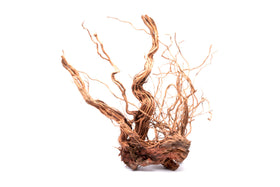
A strong, proportioned trunk branching out into thinner twigs forms the essential skeleton needed for a clean, non-cluttered canopy.
A clean bonsai shape usually has layers: trunk, primary branches, secondary branches, and then canopy. Even if the canopy is simple, that structure keeps the layout readable from across the room. If the hardscape looks messy before anything is attached, it usually stays that way afterward. A strong, layered shape also creates small zones that fish tend to explore, adding motion without crowding.
Build the Bonsai Layout Step by Step
We’ll walk through a straightforward process that keeps the hardscape stable, maintains a clean composition, and ensures the fish can still enjoy your tank.
Dry Fit First, Then Lock It In
Start by placing the “tree” in an empty tank and viewing it from the front and sides. Shift it until the silhouette looks strong and the trunk line feels confident. Then secure the base with aquarium-safe glue or weights to prevent it from drifting or shifting later. A stable tree makes everything easier, from planting to siphoning, and it keeps fish from getting stressed by constant rearranging.
Anchor the Scene With a Base

Securing the bonsai trunk onto porous lava rock creates a solid foundation, allowing the tree to lean dramatically over a winding pathway.
A bonsai looks more convincing when it feels rooted in an environment. Build a base that blends the trunk into the layout instead of making it look like it’s sitting on top of the substrate. Stones, slopes, and small transition areas help the tree feel “planted.” They also create gentle breaks in the landscape that some fish will naturally use as cover or resting areas.
Creative Bonsai Design Ideas
Once the basics are handled, this is where the fun starts. These design directions keep the tree believable and the tank readable while still leaving room for fish to do what makes them fun to watch: swim, school, explore, and chill.
The Cliffside Leaner
A leaning bonsai adds motion instantly. Angle the trunk like it’s been pushed by wind for years, then keep open space in the direction it’s “leaning” into. That open water becomes a natural swim lane, which looks especially good with small schooling fish. The key is restraint. Let the angle tell the story and avoid crowding the canopy area.
The Twin Tree Scene

Staggering two similar-sized trees (like the UNS 011 set behind the UNS 013) creates natural foreground, midground, and background separation.
Two smaller trees can create a forest vibe without needing a massive tank. Make them feel related but not identical by giving one a stronger silhouette and letting the other support it slightly behind or to the side. That offset creates depth and keeps the layout from feeling symmetrical. Leave space between the trees so fish can weave through the middle without the scape feeling cramped.
The Arch or Crescent Focal Point
A curved bonsai shape can frame the tank like a natural doorway. The curve guides the eye and creates an instant focal zone underneath, which fish often treat like a tunnel. To keep it looking intentional, leave the center of the arch relatively open. That empty space is what makes the curve dramatic and keeps the whole tank from feeling stuffed.
The Minimalist “Gallery” Bonsai
This style is for anyone who loves clean lines and hates clutter. Use one strong bonsai shape, place it slightly off-center, and keep the rest of the layout simple. Open foreground and open water make the fish stand out more, too, since there’s less visual noise. It’s also easier to maintain because there are fewer tight pockets that trap debris.
Bonsai as a Clear Focal Point

The finished look! Attaching Willow Moss (Fontinalis antipyretica) to bonsai branches creates the illusion of underwater leaves.
The best bonsai aquascapes feel like a tiny world with a clear focal point and just enough open space to let it shine. Start your brainstorming with these four creative bonsai plant ideas for fish tanks, then start building your dream hardscape! Keep the basics in mind, and that cool idea will turn into a stunning setup that you can show off to anyone.
Ready to bring the bonsai to life? Buce Plant offers different varieties of aquatic bonsai tree hardscape, so it’s easy to start with a silhouette that already looks tree-like and fits your tank’s footprint. Choose a shape that matches your layout style, then build around it with clean negative space and clear swim lanes so the scene feels natural and beautiful. Start your aquascaping today!
Leave a comment