


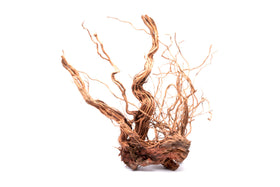

Aquatic Bonsai Tree Ideas for Nature-Style Layouts
An aquatic bonsai tree can serve as the stunning centerpiece for any nature-style aquarium, bringing a sense of serenity and age to your underwater world. These captivating structures mimic the look of ancient trees, creating a focal point that draws the eye and anchors the entire aquascape.
Whether you're a beginner or a seasoned aquascaper, incorporating a bonsai tree can elevate your design, offering a unique blend of art and nature. Read on to discover creative and beautiful aquatic bonsai tree ideas for your nature-style layouts.
Selecting the Right Bonsai for Your Aquarium
 Bonsai Driftwood in a UNS 60U Rimless Tank
The first step in creating your aquatic bonsai is choosing the right piece of driftwood. What you are looking for is not a living bonsai tree, but rather a piece of aquarium-safe hardwood that has been crafted to resemble one. These pieces come in various shapes and sizes, from small, delicate trees perfect for nano tanks to large, intricate structures that can dominate a larger aquarium.
When selecting your bonsai, consider the overall scale of your tank. A tree that is too large can overwhelm the space, while one that is too small might get lost among other elements. Look for wood with interesting branch patterns and a solid, stable base.
Preparing Your Bonsai for Your Tank

Tannins released from Bonsai Wood
Once you have selected the perfect piece of driftwood, you need to prepare it before adding it to your aquarium. Most types of hardwood used for aquascaping are very buoyant and will float if you simply place them in the water.
Preparation also helps remove excess tannins, which are natural compounds that can stain your aquarium water a tea-like brown color. While tannins are not harmful to your fish, they can impact water clarity and aesthetics. They’ll also lower the pH level of your aquarium water over time. Properly preparing your bonsai ensures it will sink and helps maintain the clear water you want for your nature-style layout. There are two primary methods for this preparation process.
Soak Your Bonsai
Soaking is the simplest and most common method for preparing bonsai driftwood. Find a container large enough to fully submerge the wood, such as a large bucket or a storage tote. Fill it with water and place the bonsai inside, using a heavy, non-metallic object to weigh it down if necessary. During this time, the wood will gradually absorb water and become waterlogged, which will cause it to sink on its own.
Boil Your Bonsai
Boiling is a faster alternative to soaking and is especially effective at sterilizing the wood and releasing tannins more quickly. This method is best suited for smaller pieces of bonsai driftwood that can fit entirely into a large stockpot.
Place the wood in the pot, cover it with water, and bring it to a boil. Let it simmer for at least one to two hours. You will see the water turn dark brown very quickly as the tannins are released. After boiling, carefully remove the wood and let it cool.
You might need to repeat the process with fresh water a few times for very dense pieces of wood. Boiling not only makes the wood sink faster but also kills any potential pests, algae spores, or bacteria that might be on the surface, ensuring it is safe for your aquarium inhabitants.
Combining Bonsai Driftwood With Aquatic Plants

UNS Bonsai Tree planted with Buce and red stem plants
One of the best ideas for adding aquatic bonsai trees to your nature-style layout is to combine the driftwood with other aquatic plants. By attaching certain types of plants to the branches, you can create the illusion of a lush, green canopy, just like a real bonsai tree.
Mosses are the most popular choice for this purpose. Java moss, Christmas moss, and Flame moss are all excellent options that attach easily to wood and grow into a dense, tree-like foliage. To attach the moss, you can use a cotton thread, which will dissolve over time as the moss establishes its grip, or a super glue gel that is specifically formulated to be aquarium-safe. Simply apply a small amount of glue to the branches and press the moss onto it.
You can also use epiphytic plants like Anubias Nana Petite or various types of Bucephalandra to add different textures and shades of green to your tree's "leaves."
Shaping and Pruning Your Aquatic Bonsai

Trimming a Bonsai Tree aquascape using UNS Curved Scissors
Just like a terrestrial bonsai, your aquatic version will require some shaping and pruning to maintain its appearance. The moss and other plants attached to the branches will grow over time, and if left unchecked, they can become overgrown and lose the desired tree-like shape. Regular trimming is essential.
Use a pair of sharp aquascaping scissors to carefully trim the moss, shaping it to resemble a neat canopy. Be careful not to cut too close to the wood, as this can damage the plant's hold. You can shape the moss into rounded clumps or a more layered canopy, depending on the look you want to achieve. Pruning also encourages denser growth, so your bonsai will look fuller and healthier over time.
Creative Layout Ideas for Nature-Style Aquariums

UNS 5N aquascape ft. Bucephalandra on Bonsai Tree
An aquatic bonsai tree opens up a world of creative layout possibilities. You can create a solitary, majestic tree in the center of your tank, surrounded by a lush carpet of low-growing plants to create a serene, park-like scene. Alternatively, you could use multiple smaller bonsai trees of varying heights to create a miniature forest effect, with pathways of sand or fine gravel winding between them.
Another popular idea is to place the bonsai on a "hill" or elevated section of the aquascape, using rocks and substrate to build up the landscape. This adds depth and a sense of scale to your design. You can also incorporate other pieces of driftwood or rocks around the base of the bonsai to create a more natural and integrated look, as if the tree has been growing there for centuries.
Troubleshooting Common Issues With Aquatic Bonsai

Algae growth on Bonsai Driftwood
Even with careful planning, you might encounter some common issues with your aquatic bonsai. One of the most frequent problems is algae growth, especially on the mosses. Algae can thrive in conditions of high light and excess nutrients.
To combat this, you can reduce your lighting period, ensure you are not over-fertilizing, and introduce algae-eating shrimp, like Amano shrimp, which love to graze on mosses and keep them clean.
Another issue can be the plants detaching from the wood. This can happen if the initial attachment was not secure. If you see moss or other plants coming loose, you can simply reattach them using aquarium-safe glue or thread. If your driftwood starts to grow a fuzzy, white biofilm, do not panic. This is a harmless bacterial bloom that often appears on new driftwood and will typically disappear on its own in a week or two.
Creating and maintaining an aquatic bonsai tree is a deeply rewarding experience that combines the art of aquascaping with the timeless beauty of nature. It requires patience and a bit of creativity, but the result is a breathtaking underwater landscape that you can enjoy every day. Find beautiful hardscapes when you shop the selection of bonsai trees for aquariums at Buce Plant today.
Comments
Leave a comment