




Hydrocotyle Sibthorpioides
Plant Profile
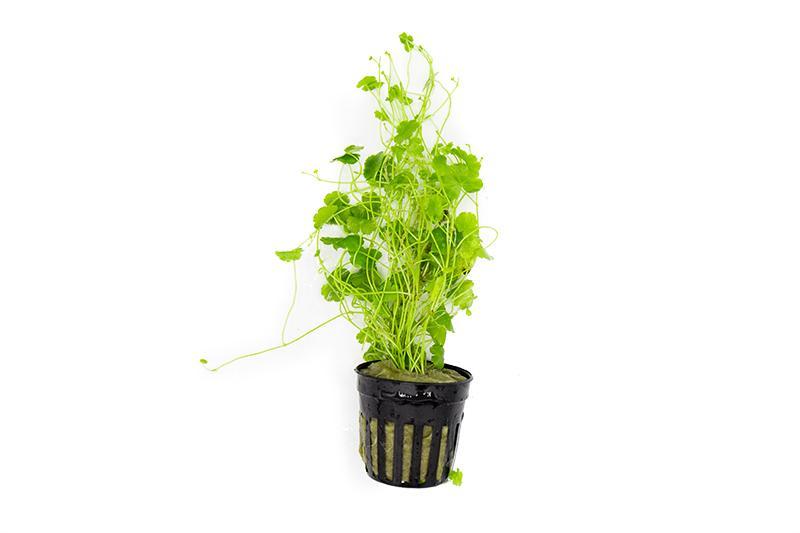
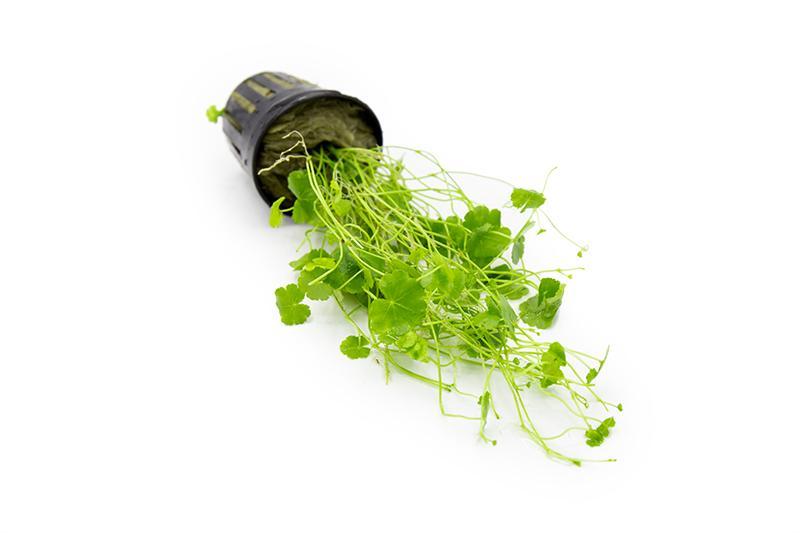
Hydrocotyle Sibthorpioides, commonly known as Lawn Marsh Pennywort, is a charming little aquatic plant native to Asia with delicate, rounded, clover-like leaves. It's often compared to the popular Hydrocotyle tripartita 'Japan', but produces distinctively rounder foliage. It's also refreshingly easy to work with: run it as a low-growing foreground carpet under high light and CO2, let it bush out in the midground, or just let it trail across your hardscape and see where it ends up. Thanks to its fast growth rate, it's a great option when you want lush greenery filling in your freshwater aquascape sooner rather than later.
*Form Notice: Photos display this plant in both its emersed (above-water) and submerged forms. Depending on nursery availability and seasonality, you may receive this plant in either form. Learn more about what to expect by reading our guide on Emersed vs. Submerged-Grown Aquatic Plants.
Key Features & Benefits
- Rounded clover-like leaves create unique visual texture across foreground carpet, midground, or hardscape zones.
- Rapidly fills in empty space while helping absorb excess water column nutrients.
- A versatile growth pattern can be trained into a tight foreground carpet.
Care & Planting Instructions
- Prep the plant by removing it from the pot and clearing all rockwool from the roots.
- Use fine-tip pinsettes to push individual stem clusters 1 to 2 inches into nutrient-rich substrate, spacing them slightly apart to encourage lateral running shoots.
- Provide medium-to-high lighting and nutrient-rich aquarium soil; while adaptable, providing pressurized CO2 injection and intense light keeps growth low, dense, and carpet-like.
- Maintain stable water parameters and avoid sudden environmental shifts to prevent leaf melt or stem rotting.
- Trim runner shoots anywhere along the stem with curved scissors to encourage thicker, more compact branching. Read our trimming & propagation guide for details.
Quick Facts
Listed information should be treated as general guidelines only. Team Buce Plant encourages you to do thorough research to ensure healthy growth!
| Attribute | Specification |
|---|---|
| Scientific Name | Hydrocotyle sibthorpioides |
| Common Name(s) | Hydrocotyle Sibthorpioides, Lawn Marsh Pennywort |
| Family | Araliaceae |
| Plant Type / Taxonomy | Stem / Creeping Carpeting Plant |
| Care Difficulty | Easy to Moderate |
| Light Requirement | Medium to High |
| CO2 Requirement | Required (Essential for low carpeting growth) |
| Placement / Usage | Foreground Carpet / Midground Bushing |
| Height / Size | 5–10” (Easily kept under 2” with pruning) |
| Growth Rate | Moderate to Fast |
| Water Parameters | pH 6.5–7.5 |
| Propagation Method | Cuttings / Splitting Rooted Clumps |
| Origin | Asia |
Frequently Asked Questions
1. How does Hydrocotyle Sibthorpioides differ from Hydrocotyle Tripartita 'Japan'?
While both species feature clover-like trailing foliage, Hydrocotyle Sibthorpioides produces noticeably rounder, less deeply lobed leaf margins compared to the three-lobed shape of Hydrocotyle tripartita 'Japan'.
2. How do I keep Hydrocotyle Sibthorpioides low-growing as a foreground carpet?
To keep the plant creeping horizontally across the substrate rather than growing tall, supply high-intensity lighting, pressurized CO2, and routinely trim vertical shoots. Light pruning triggers lateral runner shoots that stay close to the soil.
3. How do I transition Hydrocotyle Sibthorpioides from emersed to submerged growth?
When transitioning from emersed to submerged growth, plant bare stem clusters securely into nutrient-rich substrate under medium-to-high lighting and keep water parameters stable. As new growth adapts, the plant will shed its stiffer emersed foliage and sprout delicate, round underwater leaves. Once new runners spread, trim away old lower growth to encourage a dense carpet.