









Ludwigia Sedioides
Plant Profile
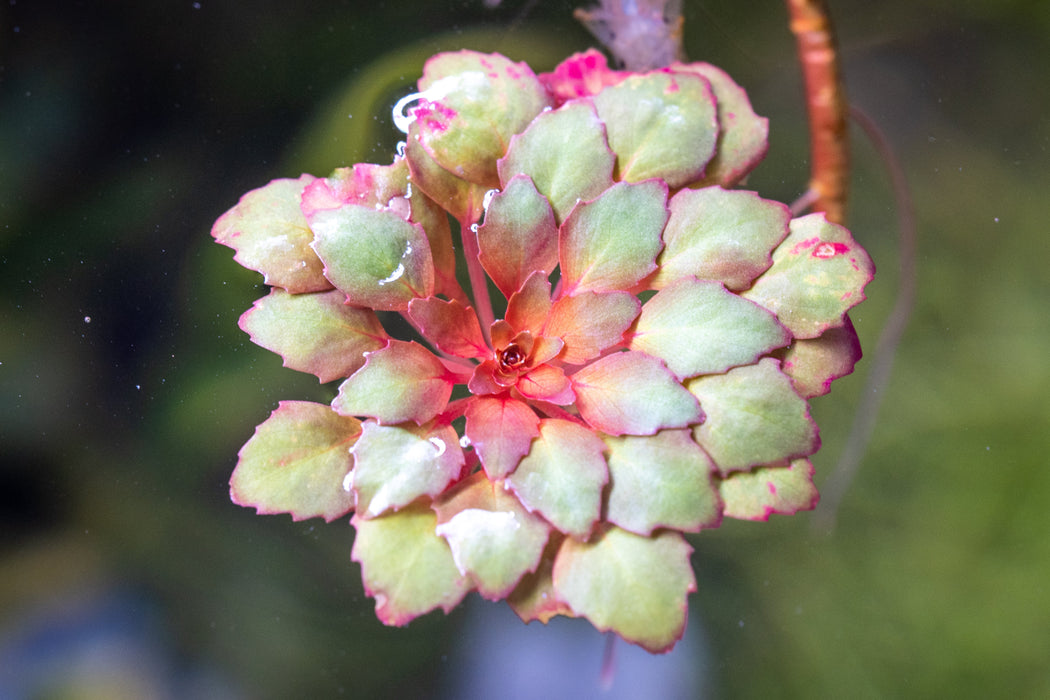
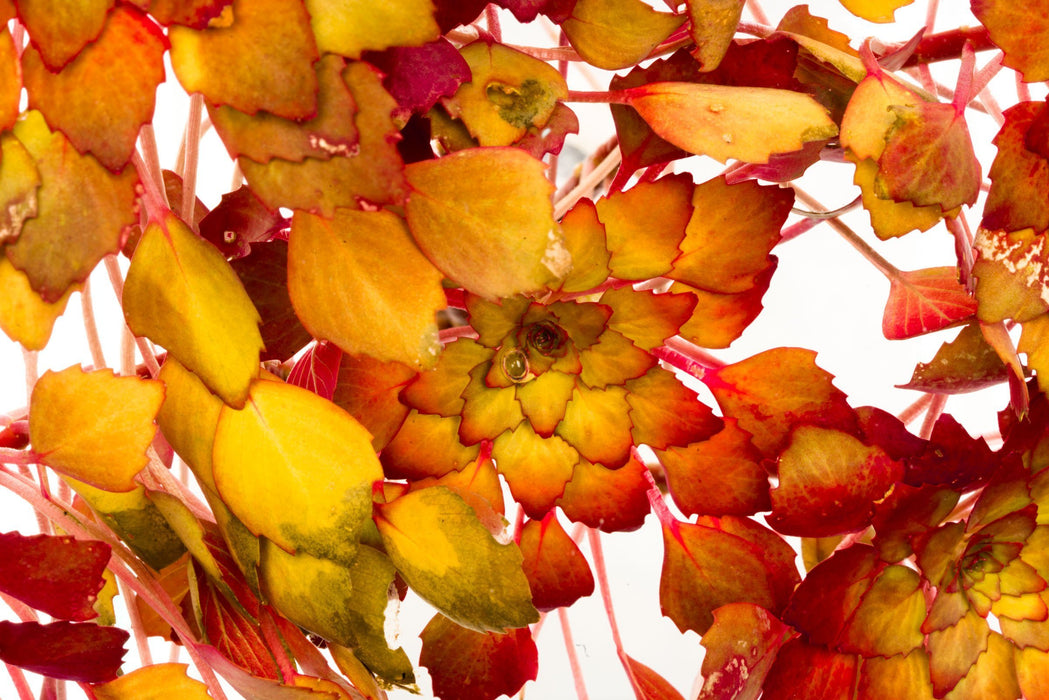
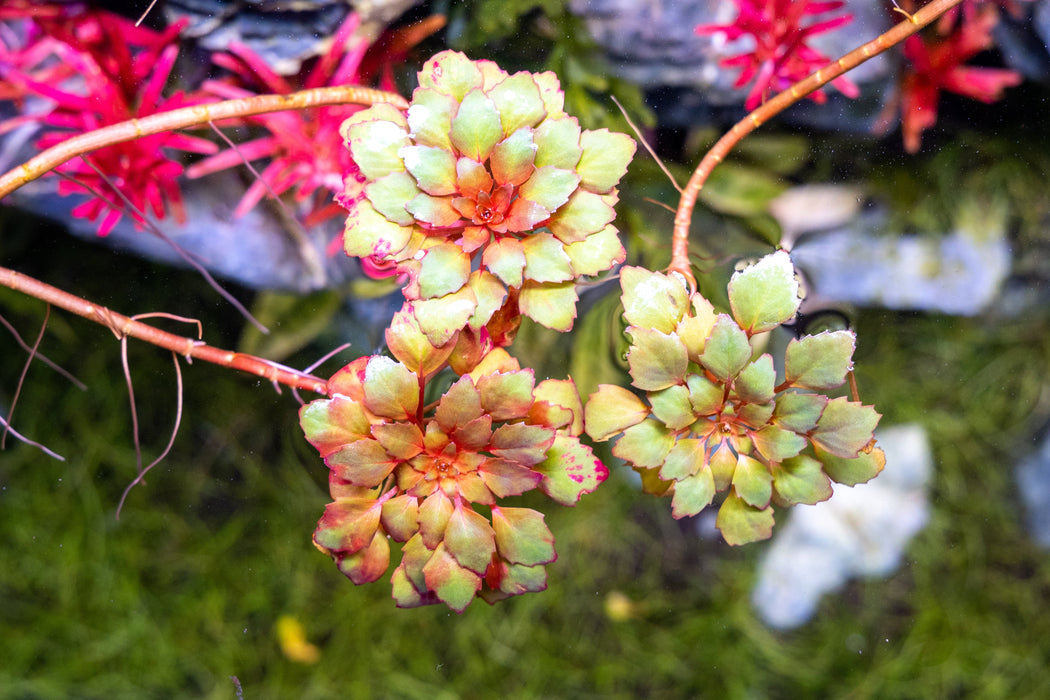
Ludwigia Sedioides, commonly known as the Mosaic Plant, is a truly one-of-a-kind floating aquatic plant native to Central and South America. Living up to its name, its diamond‑shaped green leaves radiate from a central stem in a perfect mandala rosette that drifts across the surface like living tilework. Jagged red edges deepen under strong sunlight or high‑powered LEDs, and the plant even has a day‑night routine: rosettes open wide during the day and fold slightly at night, as if it’s clocking out. In warm water with high light, it produces charming yellow, buttercup‑like flowers that elevate open‑top aquariums, ponds, and container water gardens with a little extra flourish. A large tank is needed to accommodate the 3-5” width of mosaic plants, especially because they will cut off light to anything underneath them.
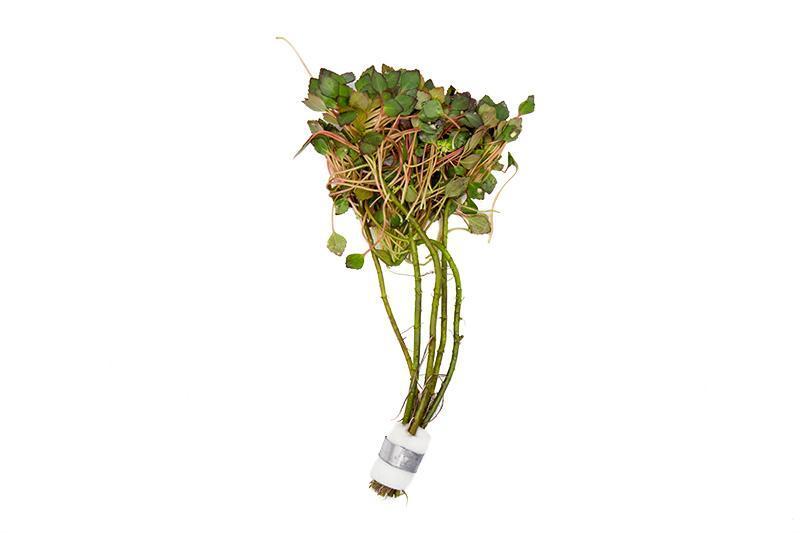
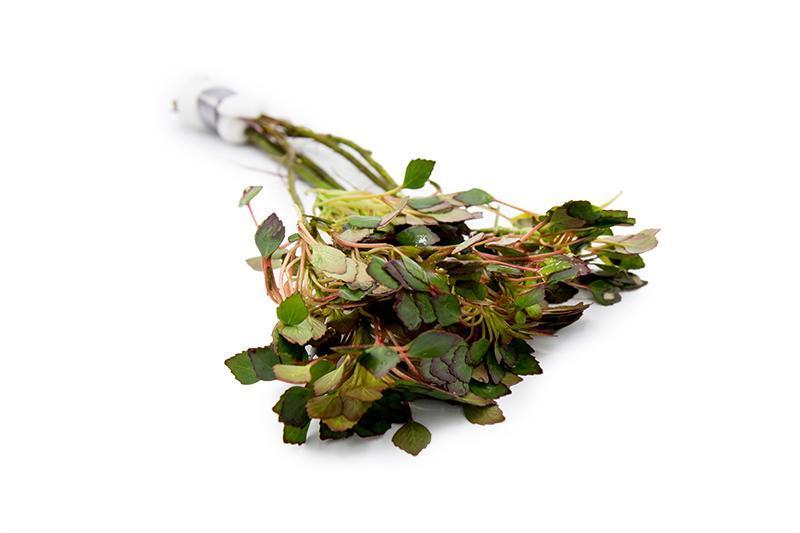
*Form Notice: Photos display this plant in both its emersed (above-water) and submerged forms. Depending on nursery availability and seasonality, you may receive this plant in either form. Learn more about what to expect by reading our guide on Emersed vs. Submerged-Grown Aquatic Plants.
Key Features & Benefits
- Floating rosettes form geometric, mandala‑like patterns.
- Color‑shifting foliage produces bright buttercup‑yellow flowers in warm conditions.
- Day–night leaf movement opens during peak light and folds slightly at night.
Care & Planting Instructions
- Remove lead weight and remove cotton wrap (or foam) surrounding the base, taking care not to snap the long main stem connected to the floating rosette. *Ludwigia Sedioides stems are fragile, so handle with care during preparation.
- Anchor the rooted lower stem 1 to 2 inches into aquarium soil using fine-tip pinsettes, allowing the rosette stem to reach vertically so leaves rest flat on the water surface.
- Provide high-intensity lighting and warm water temperatures; strong lighting is required for compact mandala formatting, vibrant red leaf edges, and flowering.
- Keep water movement calm at the surface so the floating rosettes stay upright and avoid being pushed under filter outlets.
- Trim elongated lower stems with straight scissors or harvest side shoots once rosettes fill the surface area to ensure lower submerged plants still receive adequate light. Read our trimming & propagation guide for details.
Quick Facts
Listed information should be treated as general guidelines only. Team Buce Plant encourages you to do thorough research to ensure healthy growth!
| Attribute | Specification |
|---|---|
| Scientific Name | Ludwigia sedioides |
| Common Name(s) | Mosaic Plant, Ludwigia Sedioides, False Loosestrife |
| Family | Onagraceae |
| Plant Type / Taxonomy | Floating Rosette Stem Plant |
| Care Difficulty | Easy to Moderate |
| Light Requirement | High |
| CO2 Requirement | Not Required (Gains atmospheric CO2 directly at surface) |
| Placement / Usage | Surface Floating / Open-Top / Pond Accent |
| Height / Size | 10–23” Stem (3–5” Rosette Diameter) |
| Growth Rate | Moderate |
| Water Parameters | pH 6.5–7.5 |
| Propagation Method | Cuttings / Side Shoots / Seed |
| Origin | Central & South America |
Frequently Asked Questions
1. Will Ludwigia Sedioides shade out the rest of my aquarium?
Because Mosaic Plants produce dense, 3–5” wide floating leaf rosettes, they block light from reaching lower underwater plants. Position them in open areas or trim excess rosettes regularly so light penetrates down to your submerged aquascape.
2. How do I make my Mosaic Plant leaves develop deeper red edges and produce yellow flowers?
High-intensity light is essential for Ludwigia Sedioides. Placing it under intense full-spectrum LED lighting or natural sunlight along with warm water temperatures triggers anthocyanin production (turning the leaf borders deep red) and induces buttercup-yellow flowering.
3. How do I transition Ludwigia Sedioides from emersed to submerged/floating growth?
When transitioning to your tank, anchor the lower stem securely into soil while letting the leaf rosette float naturally at the surface. Under strong light and stable water parameters, the plant will quickly anchor its roots into the substrate and sprout new, perfectly formed geometric floating leaves.