


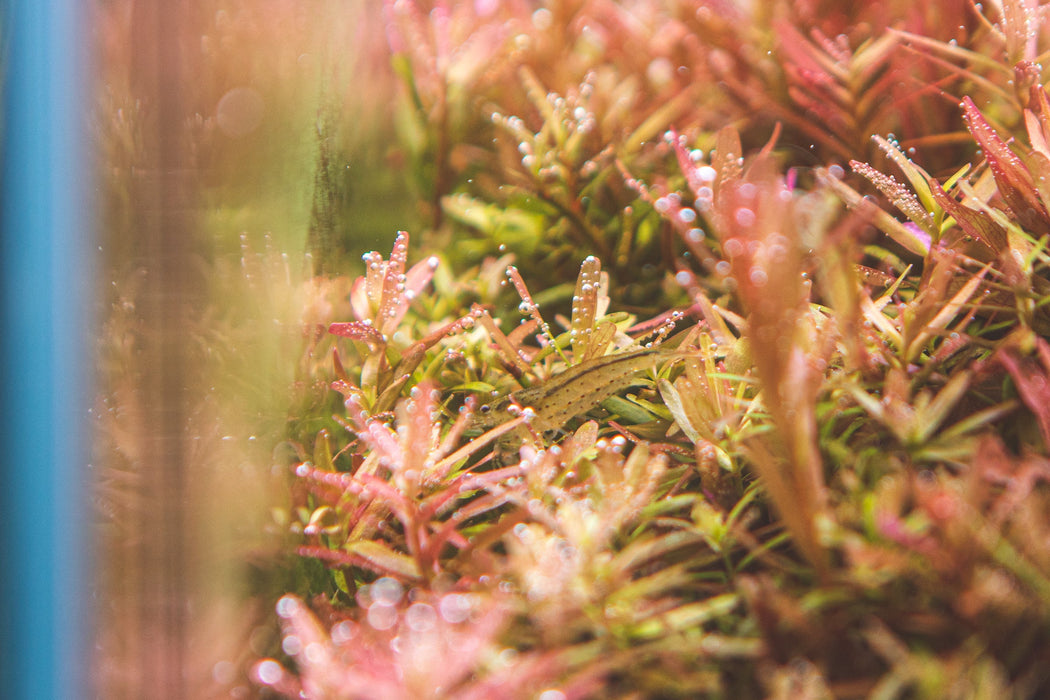
Rotala Indica
Plant Profile
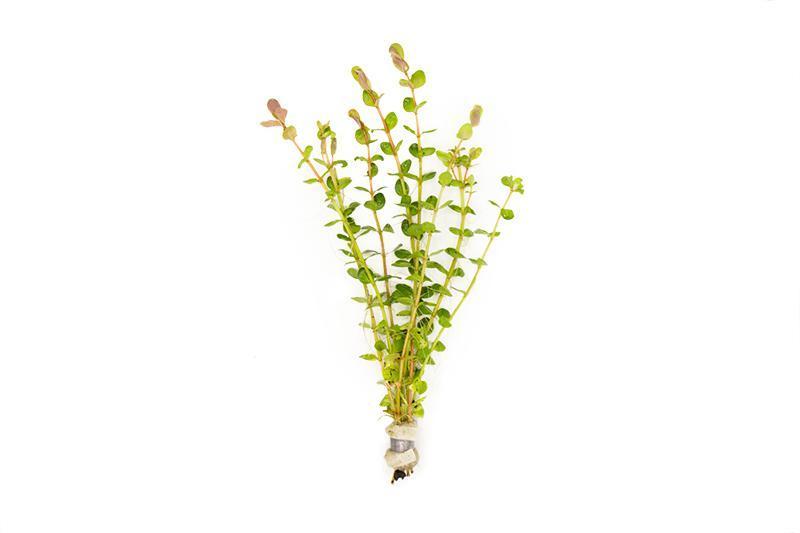
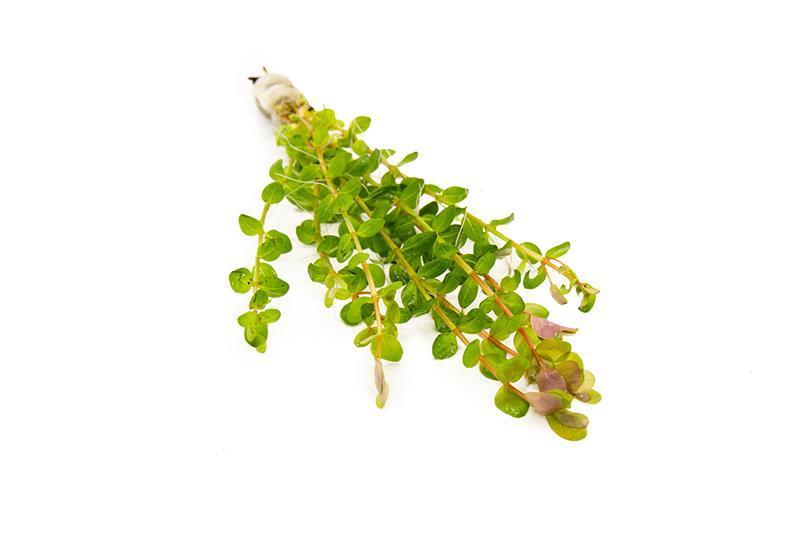
Rotala Indica is a classic aquatic stem plant native to the rice paddies, wetlands, and slow-moving waterways of Southeast Asia and India. Historically prized by aquascapers for its clean architectural look, this species is characterized by thick, vertical stems lined with small, rounded, cup-like leaves that grow horizontally in opposite pairs. While its lower foliage maintains a vibrant, light-green color, the growing tips shift into soft pink, orange, and bright reddish tones under high-intensity lighting and fertilization. When planted in dense groupings toward the background or midground of a planted tank, routine pruning turns Rotala Indica into a dazzling, thick geometric hedge.
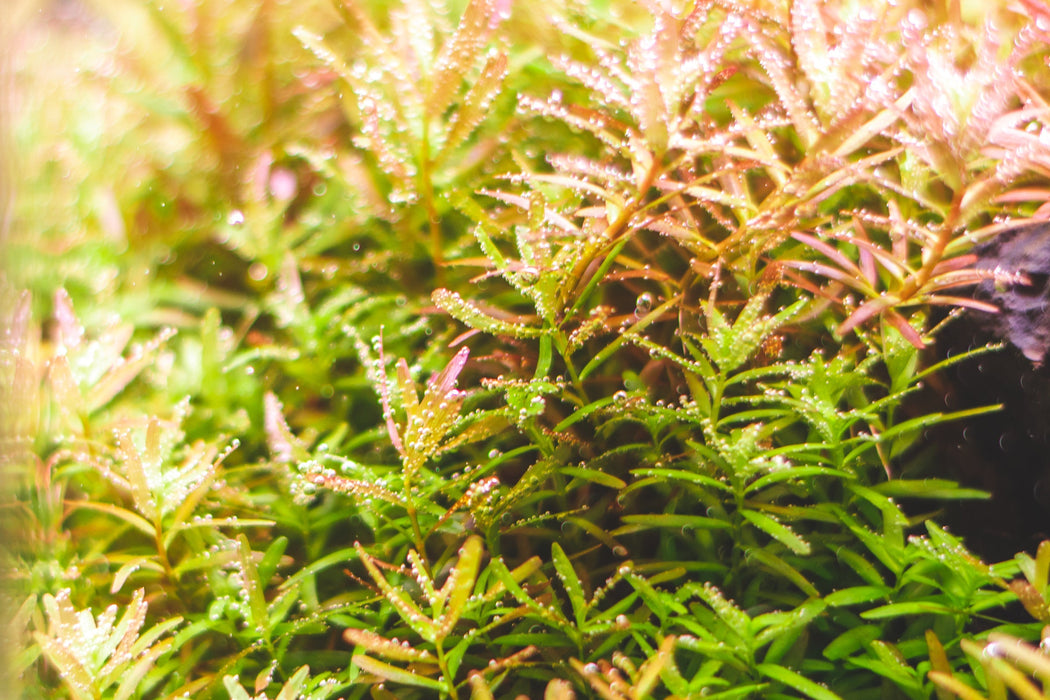
*Form Notice: Photos display this plant in both its emersed (above-water) and submerged forms. Depending on nursery availability and seasonality, you may receive this plant in either form. Learn more about what to expect by reading our guide on Emersed vs. Submerged-Grown Aquatic Plants.
Key Features & Benefits
- Sturdy vertical stem structure with rounded horizontal leaves provides clean structural symmetry and unique architectural texture.
- Growing leaf tips transition from light green into soft pink and reddish tones when provided with high lighting and iron supplementation.
Care & Planting Instructions
- Remove lead weight and remove cotton wrap (or foam) surrounding the base, then strip the lower inch of foliage so bare stems anchor cleanly into soil without rotting. *Rotala leaves can be fragile, so handle stems with care during preparation.
- Use fine-tip pinsettes to push individual stems 1 to 2 inches into soil, spacing them about half an inch apart in the background or midground so light reaches lower foliage.
- Provide medium-to-high lighting. Adding pressurized CO2 and liquid iron fertilizers accelerates growth and triggers vibrant pinkish-red leaf tips. See our guide to growing red aquarium plants.
- Maintain stable water parameters and avoid sudden environmental shifts to prevent leaf melt or stem rotting.
- Trim stem tops with straight scissors once they reach the water surface to encourage new lateral shoots and create a dense, bushy hedge. Read our trimming & propagation guide for details.
Quick Facts
Listed information should be treated as general guidelines only. Team Buce Plant encourages you to do thorough research to ensure healthy growth!
| Attribute | Specification |
|---|---|
| Scientific Name | Rotala indica |
| Common Name(s) | Rotala Indica, True Rotala Indica |
| Family | Lythraceae (Loosestrife) |
| Plant Type / Taxonomy | Stem Plant |
| Care Difficulty | Easy to Moderate |
| Light Requirement | Medium to High |
| CO2 Requirement | Recommended (Essential for rich red tips) |
| Placement / Usage | Background / Midground Bushing |
| Height / Size | 5–12”+ |
| Growth Rate | Moderate |
| Water Parameters | pH 6.0–7.5 |
| Propagation Method | Cuttings (Cut stem, new growth, or lateral shoots) |
| Origin | Southeast Asia / India |
Frequently Asked Questions
1. Why are the lower leaves falling off my stem plants?
Lower leaf loss (leggy stems) usually occurs when lighting cannot reach the bottom of the plant due to overcrowding or shading from larger plants. Spacing individual stems slightly apart during initial planting and maintaining strong light penetration will keep lower leaves healthy.
2. How do I get my Rotala Indica to develop bright pink or red tips?
Providing high light intensity along with consistent pressurized CO2 injection and regular liquid fertilizer dosing (especially iron and micro-nutrients) triggers Rotala Indica growth tips to produce anthocyanin pigments, changing the top leaves from light green to soft pink and red.
3. How do I transition Rotala Indica from emersed to submerged growth?
When transitioning from emersed to submerged growth, plant bare stems securely into rich substrate under medium-to-high lighting and keep water parameters stable. As new growth adapts, the plant will shed its rounded land leaves and sprout soft, colorful underwater foliage. Once new shoots develop, trim away old lower growth to encourage dense, bushy branching.