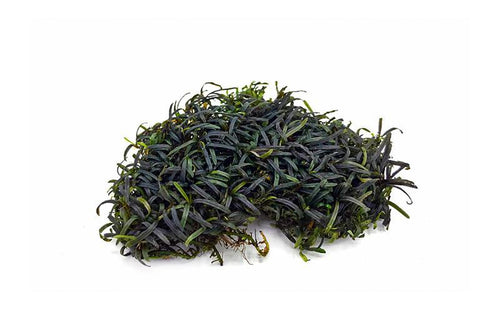
Bucephalandra Super Mini Catherinae
- $ 11.99
- $ 11.99
Plant Profile
Common Name: Bucephalandra Super Mini Catherinae
Buce ‘Super Mini Catherinae’ is one of the tiniest variants of the genus ever discovered, featuring extremely minuscule leaves that resemble a sprig of grass. This specimen is highly prized for its versatility, allowing aquascapers to create instant foreground carpets in nano setups or intricate foliage on aquarium bonsai trees. Highly versatile, it can be grown submerged or emersed, usually attached to hardscape such as driftwood or rocks rather than being buried in traditional aquarium substrate. It is an exquisite choice for both nano and large freshwater aquascapes, where it can be used to create forced perspective or serve as a unique, slow-growing alternative to moss in a planted tank.
Key Features & Notes
- The leaves are so small they mimic the appearance of fine carpeting plants like Utricularia Graminifolia , but with the hardy, epiphytic nature of a Bucephalandra.
- In larger layouts, placing Catherinae in the front and Super Mini Catherinae in the back creates a professional sense of depth, making the scape appear much larger than it is.
- Due to its scale, this variant is the premier choice for gluing to the "branches" of bonsai driftwood to simulate the look of a real miniature tree.
- Despite its delicate appearance, it is remarkably durable and thrives in shaded areas where typical carpeting plants would fail.
Care Tips & Preparation
- Bucephalandra is an epiphytic plant
that should be attached to rocks or driftwood
. Never bury the rhizome in substrate, as this will cause the plant to rot and melt.
- Avoid making drastic changes to your water parameters or lighting. Unstable conditions are the primary cause of leaf melt in new specimens.
- While this plant is hardy and low-maintenance, CO2 injection will yield much faster growth. We recommend researching your specific water chemistry to ensure your plant thrives.
- Final size and coloration depend entirely on your specific aquarium conditions. Please note that photos are a representation, and individual plants may vary.
- Please research appropriately to ensure your plant thrives.
Additional Information
Listed information should be treated as general guidelines only. Team Buce Plant encourages you to do thorough research to ensure healthy growth!
Family Name: Araceae
Origin: Borneo (Endemic)
Skill Level: Easy
Growth Rate: Slow
Light: Low to Medium
CO2: Not necessary but recommended
pH Range: 6.0 – 8.0
Propagation: Divide the rhizome with sharp scissors
-
Tweet -
Pin it