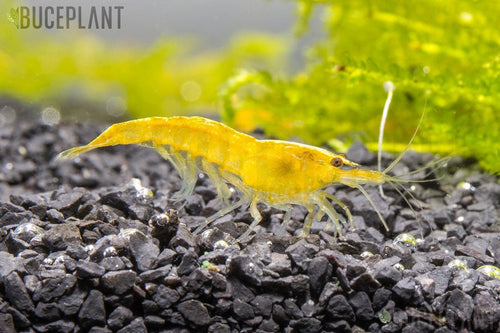
Yellow Goldenback Shrimp
- <span class=money>$ 44.99</span>
- <span class=money>$ 44.99</span>
Species Overview
Common Name: Yellow Goldenback Shrimp, Golden Shrimp, Yellow Shrimp, 24K Golden Shrimp
Scientific Name: Neocaridina Davidi "Yellow"
Genus: Neocaridina
Wild Origin: Asia
Adult Size: 1.25in
**Note: All livestock orders will come carefully packaged with solid wall Styrofoam insulation and shipped via 1-day shipping only. No additional insulation is needed for your livestock.
The Yellow Goldenback is the high-visibility, neon sign of the Neocaridina world, distinguished by its intense neon-yellow body and a striking, opaque stripe running down its back. This variety is the result of years of selective breeding; originally descending from the same lineage as Red Cherry Shrimp, breeders selected for dark "Chocolate" traits before isolating this vivid yellow pigmentation. This freshwater shrimp offers superior color density that is bright against dark substrates or heavy leaf litter in a shrimp tank.
These aquatic pets are famous for their adaptability, making them the ideal choice for beginners and seasoned hobbyists alike. Unlike sensitive Caridina species, Yellow Goldenbacks are tolerant to a fairly wide range of water parameters, making them excellent for pairing with other species. They are tireless scavengers, spending their time cleaning the shrimp aquarium by grazing on biofilm and algae. Their hardy nature and bold color make them a functional and aesthetic powerhouse for any community tank.
Key Features & Important Notes
- Tank-raised specimen
- Bright, bold color and pattern
- To increase survival rates, please allow 2-3 business days after placing an order to properly prepare live animal shipments
Recommended Water Parameters
Listed information should be treated as general guidelines only. We encourage you to do thorough research before committing to keeping any livestock.
- Temperature Range: 65-80°F
- pH: 7.0-7.6
- TDS: 250-300 ppm
- GH: 4-8
- KH: 3-15
Recommended Tank Size
5+ gallons, minimum. Tank size is relative, and various factors should be considered when determining tank size. Because they are active and social, a larger colony in a 10-20 gallon tank creates a more dynamic visual display and ensures long-term water stability.
Diet
Omnivorous. Shrimp are natural scavengers that constantly consume detritus, diatoms, and organic waste. Supplement their diet with high-quality vegetable-based shrimp pellets, spirulina wafers, and blanched vegetables. Adding textured hardscape like lava rock to your shrimp aquarium is highly recommended to maximize the surface area available for beneficial biofilm growth.
Breeding
Yellow Goldenback Shrimp are eager and prolific breeders when provided with stable water parameters and an abundance of food. Once mature, males are visibly smaller, while females feature a larger underbelly and a "saddle" behind the head where unfertilized eggs are held. We recommend starting with 8–10 specimens to guarantee a proper mix of sexes.
The breeding cycle triggers when a fertile female molts and releases pheromones. After mating, she becomes "berried," carrying the eggs through a 2-week gestation period. The resulting fry are fully self-sufficient, consuming the same biofilm and algae as adults. Be sure to leave molted shells in the tank so the fry can ingest the calcium and minerals needed to fuel their frequent growth molts.
Note that keeping shrimp with fish or aggressive tankmates can hinder reproduction; providing plenty of hiding spots and mosses is essential to make them feel secure enough to breed.
Team Buce Plant Tips
If you're new to the hobby, learn the fundamentals with our Freshwater Aquarium Shrimp Care Guide . Before introducing your new livestock into a new tank, learn about the perfect drip rate and timing in 7 Easy Steps to Drip Acclimate Shrimp and Fish . Whether you need active soil or inert sand, you can find the perfect fit to stabilize your parameters in our Best Substrate for Shrimp Guide . When your tank is balanced and your colony is thriving, check out our step-by-step breakdown on How to Breed Freshwater Shrimp.
-
Tweet -
Pin it