


How to Prep Potted and Lead Bunch Aquatic Plants!
If you're new to the planted tank hobby, you might be wondering what to do with your new aquatic plants! In general, aquatic plants are sold in portions and will come in two different styles. There are other variations and it can vary depending on where you decide to purchase from, but the most common forms will be potted and lead bunch for aquatic stems. We'll start there!
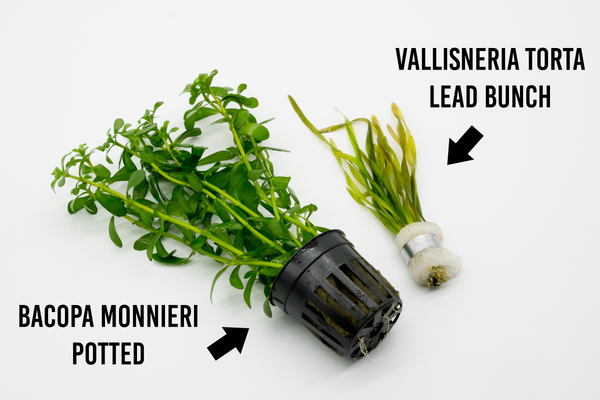
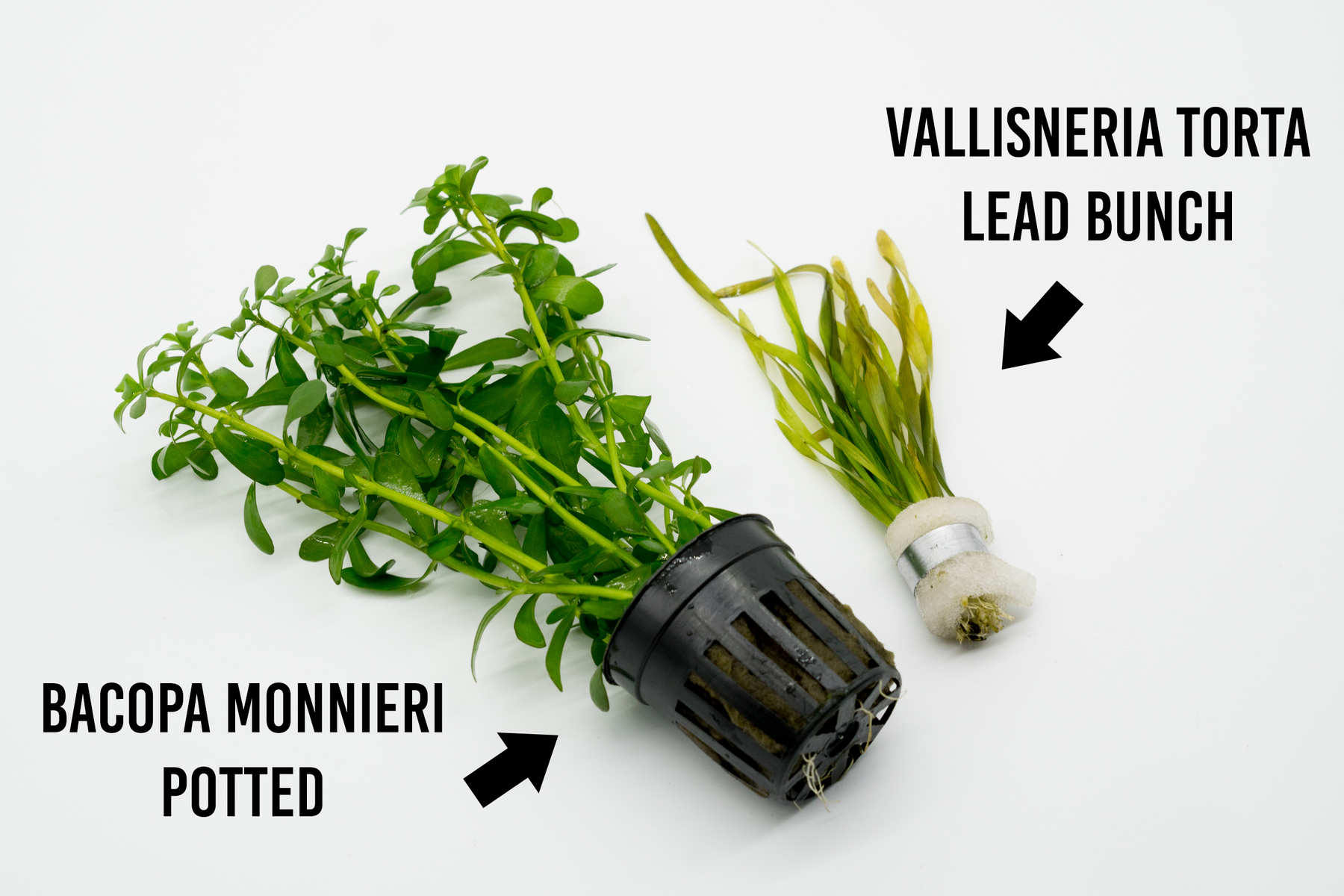
Here we have two popular aquatic plants that are also a great choice for any beginner hobbyists due to their hardy nature. On the left, we have Bacopa Monnieri in a potted form and Vallisneria Torta in the lead bunch form. Let's start with the potted versions of plants!
Potted aquatic plants will generally contain more mature, grown versions of whatever plant being held. From time to time, beginner hobbyists will simply plop the full pot into their aquarium and move on - don't do this! For starters, take the plant out of the pot. Depending on how long it has been in its pot, a light squeeze may be needed to loosen the plant from its pot.
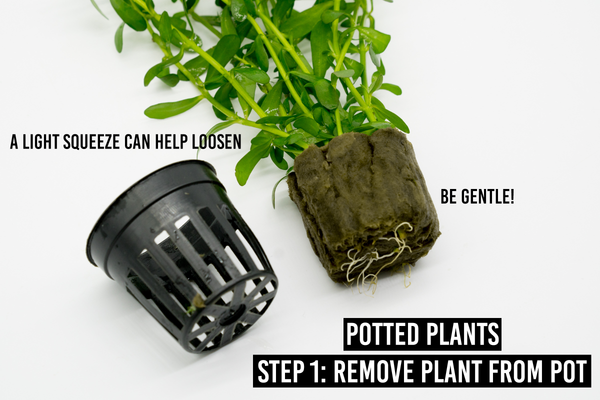
The cotton-like material surrounding the aquatic plant is referred to by many names, but for our purpose, let's call it "plant wool". This type of wool is used to protect the root system of the plant. Sometimes you will notice that there are small bead-like balls within the wool. Don't fret! Some aquatic plants require a bit more substance to stay alive in the pots and these beads are simply fertilizer aka nothing to worry about. Now that you've taken your plant out of its pot, try your best to gently remove the plant wool. Remove as much as you can without damaging the plant.
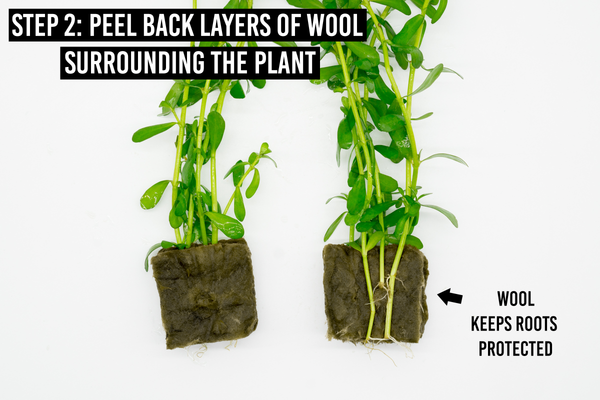
Your pot should yield a nice portion. Sometimes there are multiple layers as pictured in the photo below. Be sure to peel back all layers of wool to expose and remove all plants nestled inside.
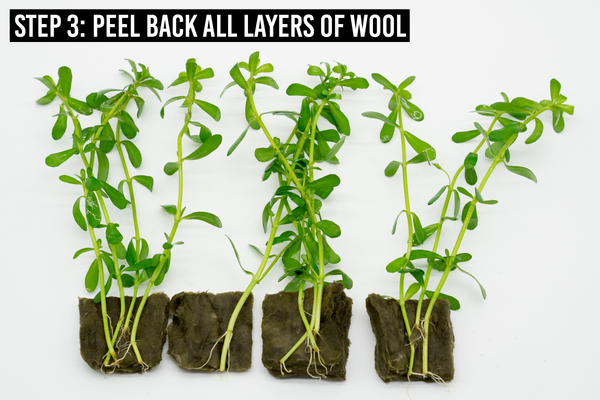
You should have something along the lines of the picture below! Sometimes the wool can be difficult to remove. If you can't get all of it off, don't worry and just make sure to remove as much as you can before planting.
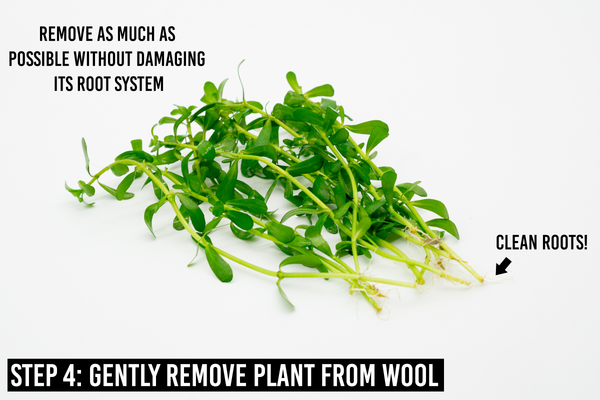
Once you've removed as much as possible, you're ready to plant. Now that we've covered potted aquatic plants, we can move on to the next commonly seen type: Lead Bunches.
Lead bunch plants can also have different names such as weighted, metal bunch and more. This basically refers to stems being wrapped by a piece of cotton and weighed down with a metal/lead weight. This helps keep the plant buried in the substrate in holding tanks and prevents it from floating up to the surface of the aquarium.
Same as potted versions, don't leave your plants in the bunch!
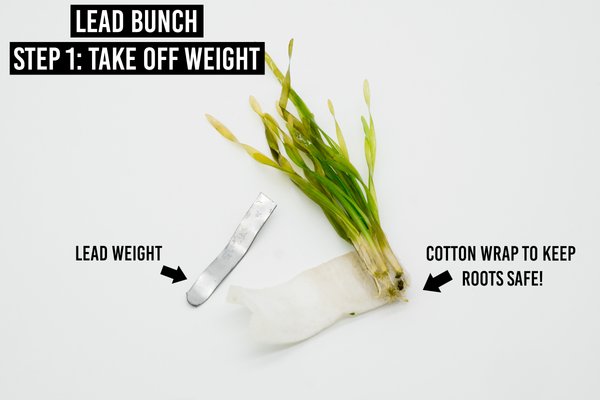
As you can see above, you can easily unbundle the weight and remove the cotton piece holding your plants together. Depending on how mature the plant is, the roots can sometimes become entangled and will actually grow into the cotton making it harder to separate. Just like the previous with potted aquatic plants, gently remove the plant the best you can without damaging the root structure.
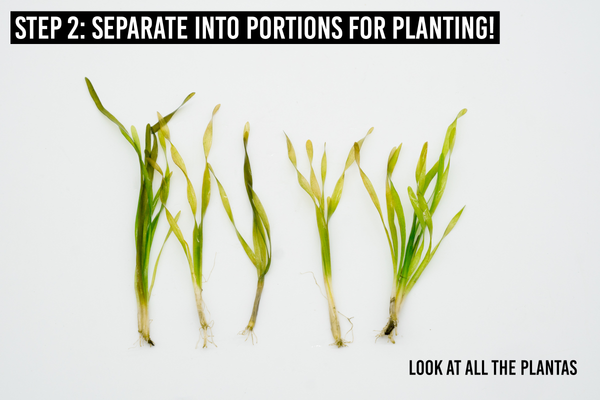
Once you've removed the plant from the cotton, you should be able to separate the plant further into "plant-able" portions! Clean them up a little and you're pretty much ready to plant. Stem plants should be planted in a nutrient-rich substrate like UNS Controsoil, while epiphytes such as buce, anubias, or java fern should be attached to hardscape. Click here for more information about which aquarium substrate is right for you.
One more thing we should mention is the act of quarantining your plants. We always recommend doing this, if possible. You can also perform a bleach dip: click here for a how-to guide. Algae and snails are part of the natural environment, therefore making it extremely difficult to guarantee the absence completely. The only way to guarantee that your plants are 100% free of any pesky algae or snails is to use Tissue Culture aquatic plants as these are grown carefully in a lab.
That's it! Next time, we'll cover another topic. Let us know in the comments below what you want to see next. :)
Tell us - Was this article helpful? Please leave a comment below!
If you have any questions regarding this article, please DM us on Instagram, Facebook, or email support@buceplant.com so we can assist you - @buceplant
Comments
Leave a comment